
Scroll to Body Content
MEDIA, TV & RADIO - ANDREW CRAWFORD OM '80
What is your profession and current position?
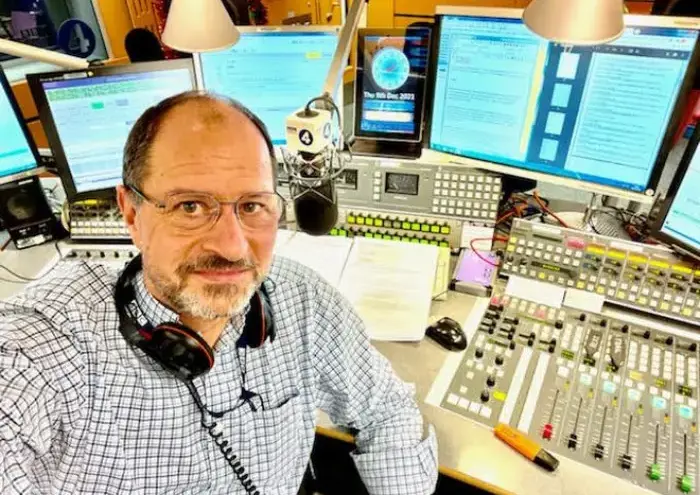
I’ve had a mixed career, doing a number of different jobs for the BBC, both on-air and behind the scenes.
My last full-time role was Head of Business Operations for BBC News, the senior manager responsible for delivering the back-office functions (including payment, scheduling, accommodation, technology, training, business continuity and data protection) that support the 7000 staff of BBC News in the UK and our 70 bureaus around the world.
I recently took early retirement and am now back for fun at Radio 4 as an announcer and newsreader. It’s a return to a role I first did early in my career, before I moved into management and projects. It’s the best job in the world.
How did Monkton get you ready for the world of work?
It gave me confidence, independence and belief in myself. I arrived at Monkton very uncertain about my abilities and unable to see how I could ever achieve anything. I was lucky to have some wonderful teachers who quietly worked their magic over five years.
Turns out I’m dyslexic - something not widely understood at that time. It makes the processing of information difficult so I was not an obvious academic. But the school patiently encouraged and supported me, helping me to achieve far more than I ever dared believed I could.
What is your biggest professional achievement?
On-air, probably breaking the news of the death of Diana, Princess of Wales, to the UK radio audience early one morning in 1997. It was a huge, shocking news story and challenging to maintain composure and gravitas on air amidst the frenetic activity going on around us in the studio.
I later went on to work behind the scenes on the major projects that redeveloped the BBC’s buildings, technology and ways of working. It’s a great feeling to walk into facilities that look and work the way they do because of something I’ve done. Years later, I’m back on-air using the same equipment and studios I had a hand in designing and configuring. Given they’re still in use and haven’t been bettered (yet) we must have done something right.
More recently, keeping our UK and global TV, radio, online and digital News operations on air despite the unprecedented impact of Covid was probably the hardest I’ve ever had to work. The fact our audience noticed very little difference is the best result one could hope for.
What has been your most challenging professional moment?
When things go wrong on-air, there’s only you, the microphone and a few million people waiting to hear what you’re going to do next. That’s drilled into me the importance of having not just a good Plan B, but a whole alphabet soup of back up alternatives.
The most challenging moments, however, have been behind the scenes.
Having to manage the performance of a member of staff who’s not working the way you need them to and is causing problems can be one of the hardest things to deal with. Or having to handle cases of long-term serious illness - or the bereavement - of valued members of staff or colleagues.
I could also add any one of the moments on the major change projects I’ve been involved in when things haven’t gone smoothly. You really earn your money when millions of pounds hangs by a thread while someone tries to fix something. As the doom mongers who said it would never work begin to sharpen their knives, you have to front it up, reassuring everyone it’ll be ok. (For the record, it all was, and has been working well ever since)
What inspires and motivates you at work?
I love a challenge. The satisfaction of delivering something difficult - succeeding where everyone else has said it’s impossible - is far greater than pushing something easy over the line.
We can’t all do everything we want in life. We each have our different limits. But I’ve found that if you push yourself, those boundaries are probably further away than you think. Being dyslexic gets in the way of reading off a page and processing information. If I’d accepted that as a limitation, I’d never have tried to become an announcer. But I worked at it until I overcame it.
Do things that stretch and scare you. You may not succeed. But then again, with persistence, you might. And if you do, that tastes very good.
What is one piece of advice you would like to share with pupils or OMs about getting into your profession?
Jobs in the media are highly sought after. Competition for the roles that do come up is tough. Disappointment and rejection is the norm. You will inevitably fail more than once to get that dream job. It happens to everyone. So long as you’ve done all you could or should to prepare your application, failure is no reflection on you or your abilities. It’s just the maths of the large number of candidates versus the small number jobs. But someone has to get them.
Talk to people in the business. Most of us love to share what we do and are happy to pass on advice. We remember all too clearly what it was like when we were younger and trying to break into the business ourselves and be flexible. If one approach fails, try another. Things are changing at an increasingly rapid rate. There are so many different opportunities now in fields that didn’t exist even a few years ago. Keep an open mind. I’ve ended up doing - and really enjoying - jobs I never knew existed.
Keep going. Learn to handle disappointment. Develop a thick skin. Do your research. Be realistic. Aim high. Don’t give up.