Academic Subjects | Monkton Combe

Academic Subjects

Monkton offers a huge range of subjects, and creates as much flexibility as possible in the timetable for GCSE and A Level to enable each pupil find their ideal combination of subjects.

Art

Art forms an integral part of the cultural life of the School. We work at developing aesthetic and cultural awareness and the intellectual rigour to equip students to cope successfully and to flourish individually in the artistic environment.

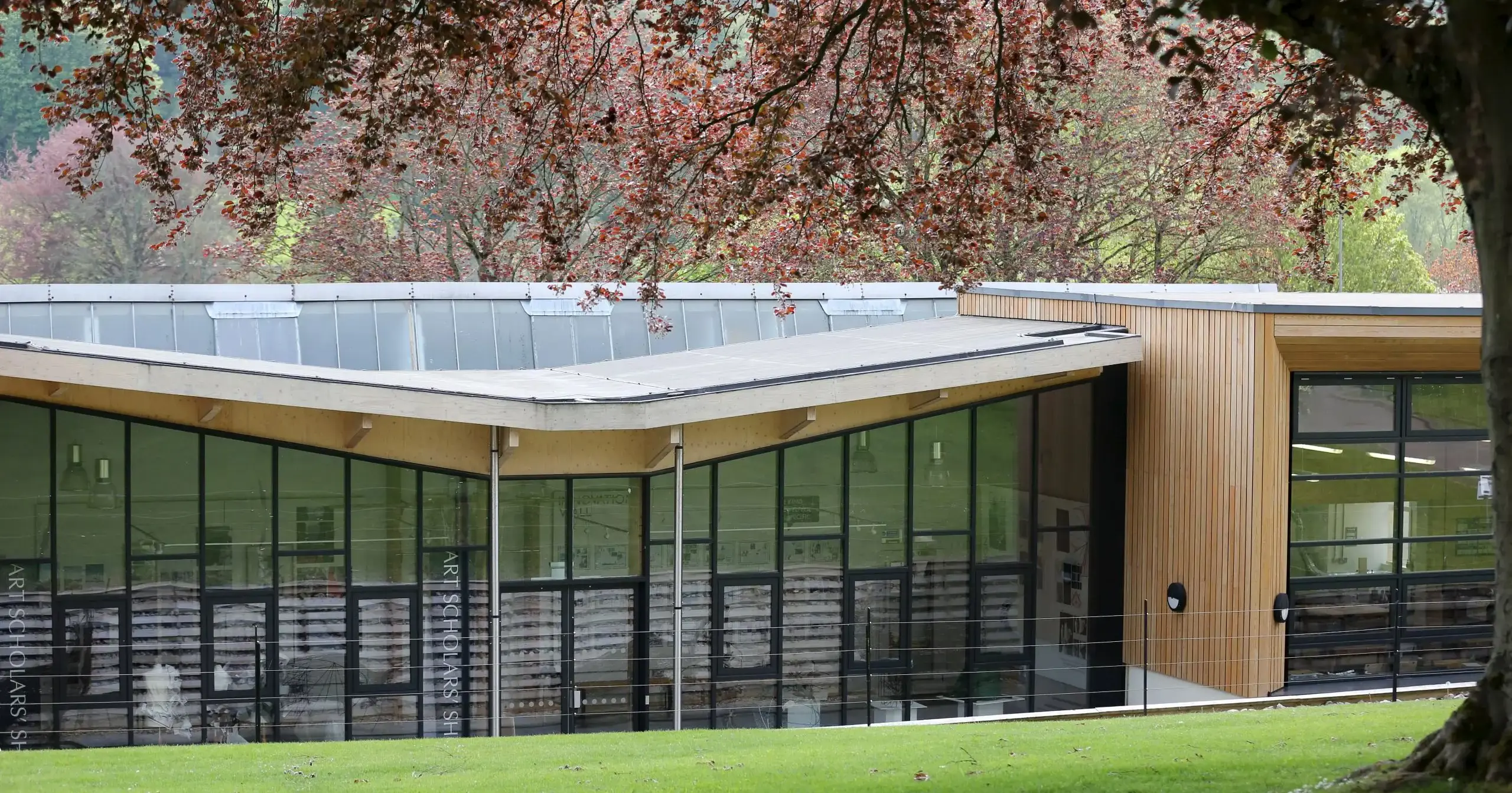
The department is attractively situated in a specialist building within the School campus. It has three studios, a photography studio and a print workshop for the production of relief, intaglio, screen and block printing. The curriculum is very broad, allowing students to experiment with all the major disciplines based around a fine art approach. All work is linked to that of contemporary artists, through research projects and links with workshops and visiting artists.

The department is open in the evenings and weekends allowing students to actively develop practical elements of the subject, as well as forming more independent responses to the needs of the curriculum.


GCSE - Years 10 & 11

Why study Fine Art?
Studying GCSE Fine Art fosters creativity, critical thinking, and self-expression. It enhances observational, technical, and problem-solving skills through drawing, painting, and mixed media. Students learn to analyse artists’ work, developing cultural awareness and artistic appreciation. The course encourages independent thinking, resilience, and experimentation, valuable in any career. It builds a strong portfolio for further art studies or careers in design, media, or architecture. The qualification develops time management and presentation skills, preparing students for higher education. Overall, it nurtures both artistic talent and transferable skills for the future.

What will I learn at GCSE?
Studying GCSE Fine Art will teach you a range of practical skills, including drawing, painting, printmaking,
sculpture, and digital art, while exploring creative techniques like composition, colour theory, and mixed-
media experimentation. You’ll learn to analyse artists’ work, understand different styles and cultural contexts, and develop your own ideas from initial sketches to final pieces, refining your personal style. 

The course also focuses on critical evaluation, helping you assess your own work and others’ to improve through feedback. Additionally, you’ll build a portfolio for further study or careers in art, design, or media, while developing independent thinking, problem-solving, and time management skills. The course balances technical ability with creative freedom, preparing you for A-Level Art or future creative professions.

How is the course structured?
The GCSE Fine Art AQA course is divided into two main components:

Component 1: Portfolio (60% of grade) – You’ll create a personal project showcasing your skills across different mediums (drawing, painting, sculpture, etc.). This includes research, experiments, and final pieces, demonstrating your creative process.

Component 2: Externally Set Assignment begins in January of Year 11, when AQA releases a theme with
starting points. You’ll develop a personal response through research, planning, and a 10-hour supervised period to produce final pieces.
Both components are assessed on four key objectives: developing ideas, refining techniques, recording
observations, and presenting a meaningful response.


How is the course examined?
The course is assessed through 60% coursework (Portfolio) and 40% externally set assignment (ESA).
For the Portfolio, you submit a body of work demonstrating your skills in research, experimentation, and final outcomes.
Teachers assess it against four assessment objectives (AO1–AO4), then AQA moderates the marks.
The ESA involves a 10-hour supervised practical exam (usually split over two days), where you create final pieces based on preparatory work. Your response to the ESA theme is marked by teachers and moderated by the exam board.
Both components are judged on: developing ideas, refining techniques, recording observations, and presenting a personal response.

Exam board: AQA


A Level - Years 12 & 13

Why study this subject?
Studying Fine Art A level fosters creativity, critical thinking, and technical skill. It allows you to explore personal expression, develop an artistic style, and understand cultural and historical contexts. The course builds portfolio pieces for art school or creative careers, enhancing problem-solving and observational abilities. It’s ideal for passionate individuals seeking a dynamic, visually rewarding subject that blends
tradition with innovation.


What will I learn at A level?
In AQA A Level Fine Art, you’ll develop practical skills in drawing, painting, printmaking, and mixed media while exploring creative concepts and personal expression. You’ll study artists, movements, and cultural contexts to inform your work. The course emphasises experimentation, critical analysis, and developing ideas into final pieces. Students may explore areas such as sculpture, ceramics, installation, collage, photography, and moving image. You’ll build a strong portfolio, refine technical skills, and gain confidence in presenting and evaluating your art.

How is the course assessed?

Work is assessed internally throughout the year, with weekly or twice weekly assignments. Final work is marked internally, then moderated by an external examiner in June of Year 13. There will be a termly charge for extra materials with this course.

Where does Art A level take you?

Monktonians go on to the top courses in the country each year: Central St Martins, Kingston, Goldsmiths, CCW, AA, LCF, Falmouth, Bournemouth and Plymouth. Local art colleges are also well attended. Most Art courses begin with a Foundation year, although some of our students go straight to degree level in fine art, graphics, interior design, fashion, architecture and illustration.

Biology

We aim to stimulate a sense of curiosity and understanding in pupils about their bodies, the world around them and, increasingly, how our species needs to be aware of what it needs to do to look after its environment. We use the course content to underpin this approach to their learning rather than just teaching them.

Biology involves the study of a wide range of exciting topics ranging from human biology and plant biology to ecology and the study of disease. Biology is a subject that is closely related to everyday life and is never far from the headlines.

Issues such as genetic engineering, viral disease and vaccination, biotechnology and global warming are some of the areas much in the news. These are explored during Years 9 to 11 along with the key topics that underlie the subject.


GCSE

What will I learn?

GCSE Biology enthuses pupils about the extraordinary sphere of Life on Earth from tiny bacteria to the complicated inner workings of our body. It is important for humans to appreciate that they are part of the world in which they exist and show an understanding of their place in it. 

By carrying out practical work and following scientific procedure during experiments pupils can learn to anticipate and adjust their lifestyles to become healthy individuals and look after the planet.


How is the course structured?

We start teaching the GCSE syllabus in Year 9, looking at how cells, and the organ systems in which they are found, keep the body alive. The vital role plants play in ensuring life on Earth exists is also emphasised. The ability to think critically and being able to evaluate information and data is now a fundamental part of Biology at GCSE. In Year 11 the structure and function of DNA (which now forms a core part of the syllabus) is looked at in detail. Much practical work is undertaken to bring to life the academic content we study.

How is the course examined?

There are two exam papers:
• Paper 1 (1h 45): Topics 1–4: cell biology, organisation infection and response and bioenergetics.
• Paper 2 (1h 45): Topics 5–7: homeostasis and response, inheritance, variation and evolution and ecology.

Exam board: AQA


A Level

Why study Biology A Level?

If you have a love of and an inquisitiveness for the living world Biology is for you. You’ll gain an appreciation of how molecular biology impacts on life at every level from the cell, to organisms like yourself and the ecosystems that provide habitiats for all organisms. Much time is spent looking at DNA and how it codes for all life on Earth.

What will I learn?

You will gain an appreciation of the four themes of how life on Earth functions by obtaining an energy source, cell theory, how structure relates to function and how evolution leads to those functional structures in organisms. The importance of DNA in modern society underpins much of the specification. You’ll be challenged intellectually, and learn to think critically.

How is the course structured?

Through the course you will have two teachers who will team teach the components of the specification together. While we do a lot of practical work you are assessed in twelve core practicals so you become competent at carrying out practical tasks. There is also a three day Marine Biology field trip to Wales, an immunity workshop at the Edward Jenner museum and a genetics workshop at ‘We the Curious’ in Bristol.

How is the course examined?

There are three two-hour exam papers. Paper 1 is based on Year 12 content, Paper 2 on Year 13 content and Paper 3 is synoptic with questions based on your ability to evaluate data and think critically.

What could I do next?

Alongside the option to pursue Biology further, because the subject can be studied alongside just about every other A-level subject you can end up pursuing a degree and career in just about every field there is; Medicine, Law, Business Management, Teaching or even Space.

Business

Business is a living subject and we don't only teach theory from the book, we teach it from real life. Teaching filled with up to date business knowledge and weekly article lessons where pupils are encouraged to bring in news events that link to areas they are studying all help pupils see how to relate to the world around them.

Business covers a broad range of topics which will help students to better understand what the subject is about through exploring:  marketing, finance, operations, human resources as well as external influences such as politics, technology and economics.

The course aims to give students an understanding of the dynamics of business activity whilst continually relating the theory to business examples and current affairs.


GCSE Years 10 & 11

What will I learn?

What is your favourite advert of all time? What are the reasons you remember it? Did you then purchase that product or service?

During this course, you will build an understanding of why that advert was effective. In addition, you will develop an understanding of how marketing links to finance, operations and employees. Students will learn to apply their knowledge and understanding to different business contexts ranging from small enterprises to large multinationals and businesses operating in local, national and global contexts. Students will learn to develop an understanding of how these contexts impact on business behaviour.

How is the course structured and assessed?

This GCSE is assessed through two papers which last for 1 hour 45 minutes. Questions vary from multiple choice, short written answers and calculations to full analytical and evaluative essays. There is no Controlled Assessment or Coursework.

Topics covered include:

  • Operations
  • Human Resources
  • Marketing
  • Finance

Previous examinations have structured the topics as follows:

  • Paper 1: Business in the Real World, Influences on Business, Operations, Human Resources.
  • Paper 2: Business in the Real World, Influences on Business, Marketing and Finance.
     

A Level Years 12 & 13

Business delves into the various ways businesses are organised internally; building an understanding of the core functions: Finance, Marketing, Operations and Human Resources. In addition, the external pressures business may face are also explored so students understand how social, legal, economic, political, technological, competition and ethical changes influence decision making.

What do I need before starting this course?

No prior knowledge is required but you will need a minimum of Level 5 in GCSE Maths as well as the ability to perform well in essay-based subjects. GCSE Business is not essential but you will be expected to display an interest in both business and current affairs.

What will I learn?

You will develop an understanding of how businesses function, alongside improving your numerical, communication, problem-solving, and analytical skills. You will learn to deploy these skills whilst considering the challenges and opportunities businesses face.

How is the course assessed?

You will sit three, two hour written exams at the end of the course. These will include numerical questions as well as shorter and extended essays.

  • Paper 1 Consists of a combination of multiple-choice, short answer and essay questions.
  • Paper 2 Consists of multiple data response scenarios.
  • Paper 3 Consists of an unseen business case study.

Where Business Studies Takes You

Many of our students go on to study Business related courses at a variety of universities across the UK.

Chemistry

Chemistry is all around us and touches all aspects of our lives. We aim to make Chemistry relevant to our students, to engage them in a vast subject, and inspire their desire to want to know more.

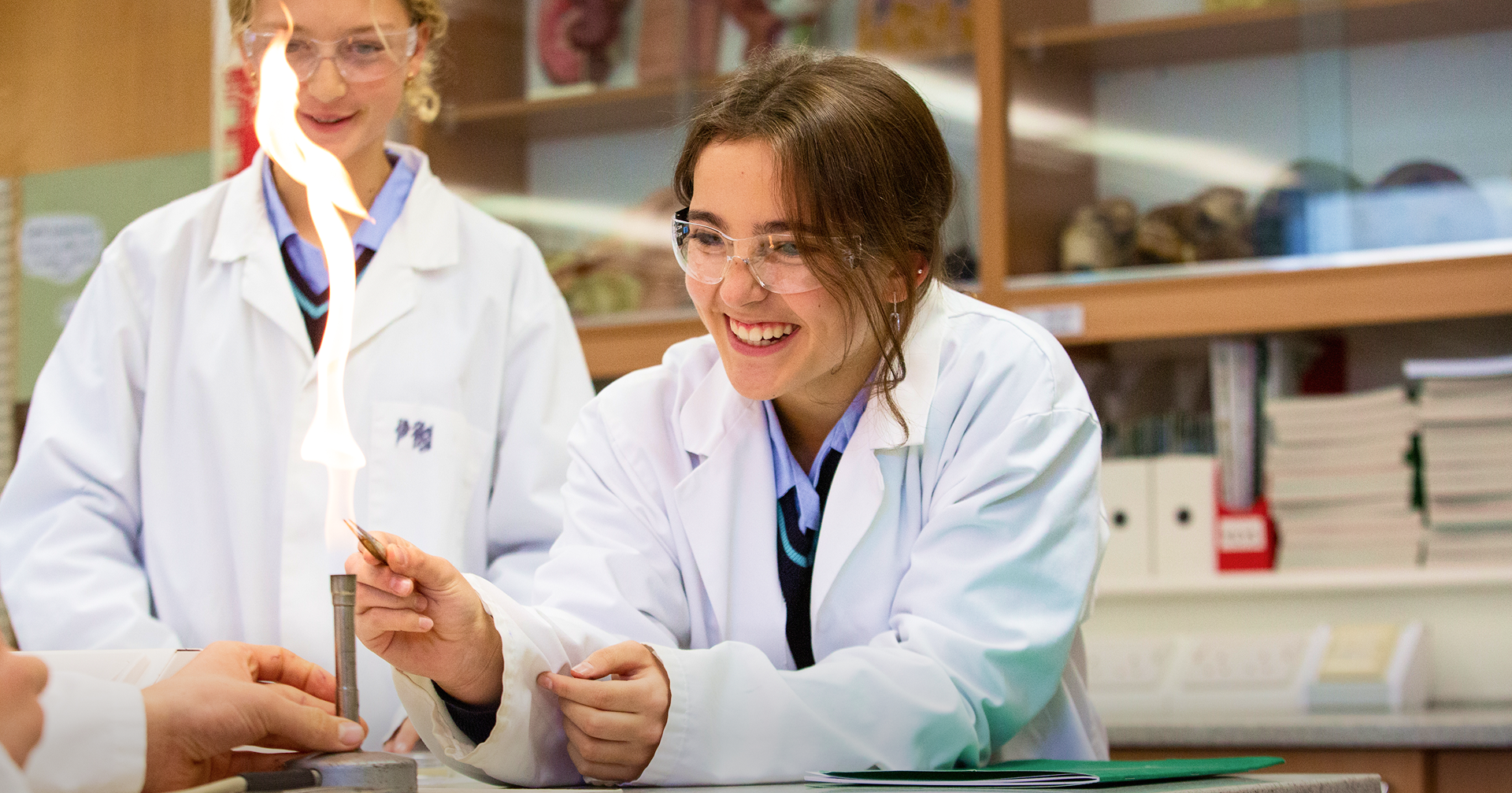
There are many exciting careers that use the skills taught in science. In Years 10 to 11, pupils are taught Biology, Chemistry and Physics separately by subject specialists within the outstanding teaching environment of our Maths & Science Centre.


GCSE

Why study this subject?

Chemistry helps us understand the materials and processes that shape our world. It develops analytical thinking, problem-solving, and practical skills, and is essential for careers in science, healthcare, and engineering. It also
supports learning in Biology and Physics, and is essential for the study of both A Levels Chemistry and Biology.

What will I learn at GCSE?

You will study a wide range of topics that show how chemistry connects to the world around us. These include atomic structure, bonding, chemical reactions, energy changes, rates of reaction, organic chemistry, and chemical analysis.You’ll also explore the chemistry of the atmosphere, sustainable resource use, and environmental impact.
Practical experiments throughout the course will strengthen your investigative and analytical skills, helping you interpret scientific data and understand real-life chemical processes.

How is the course structured?

Chemistry is taught as a single science with a mixture of theoretical, analytical and practical lessons, covering all elements of the GCSE course.

How is the course examined?

Assessment is by two written exams, each 1 hour 45
minutes.

  • Paper 1 covers topics 1-5: atomic structure, bonding, quantitative chemistry, chemical changes, and energy changes.
  • Paper 2 covers topics 6-10: rates of reaction, organic chemistry, chemical analysis, atmospheric chemistry, and using resources.

Both papers include multiple-choice, structured, and extended-response questions. There is no coursework, but practical skills are tested in the exams through questions based on required practical activities completed during the course.
There are 8 required practicals. Practicals 1-4 can be assessed in Paper 1 and Practicals 5-8 in Paper 2.


A Level

Why study Chemistry?

Chemistry is the science behind life-changing breakthroughs: from curing diseases to creating sustainable energy. It unlocks the secrets of the world around us and powers innovation in everything from tech to textiles. Studying Chemistry hones your curiosity, sharpens your thinking, and opens doors to exciting, high-impact careers.

What will I learn?

You’ll study Physical Chemistry topics like Energetics, Kinetics, and Equilibria, Inorganic Chemistry focusing on Groups 2 and 7 and transition metals, and in OrganicChemistry you will learn about a variety of functional groups including: alkanes, alkenes, haloalkanes, alcohols, carboxylic acids, amines, amides, amino acids, polymers and aromatic compounds including Benzene and Phenol; work will include understanding the chemical and physical properties, reactions and synthetic processes and analytical techniques. Theory is reinforced through practical work and university-led workshops.

How is the course structured?

The course combines theoretical and practical learning across two years. Year 1 (7 lessons a week) covers foundational topics and includes a synthesis and analysis workshop at Bath University. Year 2 (8 lessons a week) builds on this with more quantitative content and advanced practical work,including a visit to Bristol University. Topics are developed progressively across Physical, Organic, and Inorganic Chemistry. You will have two teachers one of whom will specialise in Organic Chemistry and the other will specialise in Physical and Inorganic Chemistry.

How is the course examined?

Assessment is through three written papers at the end of Year
2:

  • Paper 1 (135 minutes, 100 marks): Inorganic Chemistry and Physical Chemistry
  • Paper 2 (135 minutes, 100 marks): Organic Chemistry (Synthesis and analytical techniques)
  • Paper 3 (90 minutes, 70 marks): Unified chemistry (Synoptic Questions)

Practical skills are continuously assessed during the course to demonstrate competency in laboratory work.

What could I do next?

Chemistry A Level leads to degrees in Chemistry, Pharmacy, Biological Sciences, Veterinary Science, Medicine, Dentistry, and Engineering—opening exciting pathways into research, healthcare, and industries that tackle real-world challenges and drive innovation.

Computer Science

This is a growing subject specialism at Monkton with many pupils pursuing this at both GCSE and A Level.


GCSE

Why study Computer Science?

Computer Science GCSE is an ideal foundation for further study in Computer Science, as well as providing understanding the principles of Computer Science students with the underpinning knowledge required for many other subjects in science and engineering.

What will I learn at GCSE?

You will learn computational thinking, alongside programming by writing pseudocode. This will lead you onto high-level computer languages (Python) and develops your understanding of the main principles in problem-solving using computers. Students will apply their understanding to develop computer based solutions to set problems. You will also develop a range of technical skills, including the ability to test effectively and to evaluate computing solutions. Students will look at current computing technologies, considering the benefits of their use, as well as recognising the ethical issues and potential risks when using computers. Students are taught the component parts of computer systems, including software, data, hardware and network communication, and how they all interrelate.

How is the course structured?

You will study hardware, software and network communications in Paper 1. In addition, there is consideration of the UK laws, ethical and cultural arguments needing to be considered when using computer systems and developing further technologies. In Paper 2, algorithms and problem solving skills are developed and tested, along with programming in Python via the Google IDE Colab. We also delve into some mathematical skills with boolean logic and truth tables. The content of the two papers are taught simultaneously, building confidence and depth throughout the two years.

How is the course examined?

There are two externally examined papers:

  • Paper 1 - Computational Systems
    1 hour 30 minutes 65%
    This paper consists of multiple choice questions, short response questions and extended response questions.
  • Paper 2 - Computational thinking, algorithms and programming
    1 hour 30 minutes 45%
    This paper has two sections: Section A and Section B.

Students must answer both sections. In Section B, questions assessing students’ ability to write or refine algorithms must be answered using either the OCR Exam Reference Language or the high-level programming language with which they are familiar (generally Python).


A Level

Why study Computer Science A Level?

The art of computational thinking is a mode of thought that goes well beyond the software and hardware of the physical computer. It provides a logical framework from which a student can reason about systems and problems. The skills and awareness of the digital world will aid students to analyse, critically assess and make decisions.

What will I learn at A level?

The course covers a variety of topic areas from hardware and software, to legal and ethical issues, to the creative nature of programming. Students gain experience in developing programming languages (usually based on Python), whilst also studying how computers are built, installed and share data. The latter includes the software and physical networking solutions, the development of databases and building web based solutions using HTM, CSS and Javascript. Problem solving skills are developed with challenges to build algorithms to achieve solutions, often enhancing the students’ understanding of agile programming methods as well as testing methods for evaluation.

How is the course structured?

The course is taught as two strands, side by side, by two separate members of staff. Computer Systems: hardware; software; networking and data exchange; algorithms; legal and ethical issues. Algorithms and Programming: computational thinking; problem solving and programming; algorithms. In addition, the programming project is integrated into the course and combines teaching time with study outside the classroom. A project report with analysis, design, development and evaluation stages is written whilst also producing the programming code. Most high level languages can be used, although students have tended to produce programmes in Python with its associated libraries.

How is the course examined?

The course is examined through two written papers and one non-examined assessment (NEA) programming project.

  • Paper 1 (40%) Computer Systems: 2 hours 30 minutes written paper (no calculators).  
  • Paper 2 (40%) Algorithms and Programming: 2 hours 30 minutes written paper (no calculators).
  • NEA Programming Project (20%): coursework completed over the 2 years.

The programming project is marked internally and then moderated by OCR exam board.

What could I do next?

Given the presence of computing in the world, the experience and understanding gained from the course is applicable in most Higher Education courses and the wider world. However, it is directly relevant to degrees in Computer Science, Physics, Engineering, Graphics and Game Design.

Computer Science opens the door to many avenues, such as App Development, Game Designer, Web Authoring, Software Developer or Tester, but it also complements many subjects, especially Mathematics and the Sciences, and is a desirable subject area for recruiters post A Level and Degree Level.

Dance
Dance is a growing discipline at Monkton and we are delighted to introduce GCSE Dance. 
Design (3D Design)

Design is an exciting course at Monkton. This large department can be found next door to Art and Photography and has its very own ICT suite, fully equipped to cater to a range of design styles and preferences.


GCSE

3D Design is perfect for creative problem-solvers who love bringing ideas to life. You’ll learn to design and make innovative products using a wide range of materials and techniques through the iterative design process. It’s great for future careers in architecture, product design, jewellerydesign, engineering and many more. Plus, you’ll developskills like creative problem solving, critical thinking andproject management that are useful in any job.

What will I learn at GCSE?

In GCSE 3D Design, you’ll explore product creation. You’ll learn to sketch and develop ideas, use computer-aided design (CAD) software, and create prototypes. You will also work with different materials like wood, metal, and plastics. You’ll discover the design process, from initial concepts to final products. You will study iconic designers and design movements for inspiration. You’ll learn about sustainability in design and how to consider user needs. By the end, you’ll be able to create exciting innovative solutions.

How is the course structured?

The course is split into two main parts: coursework and exam. In the beginning of Year 10, we focus on building skills through mini-projects. You’ll try out different materials and techniques, and learn to use design software. We also start the main coursework project, which continues into Year 11. This coursework project lets you choose a theme and create a product from start to finish. You’ll research, sketch ideas, develop designs, make prototypes, and produce a final piece. Then in January of Year 11 you will start the exam project which is a mini design and make project.

How is the course examined?

The course is assessed through both coursework and an exam project. The coursework, called the Non-Exam Assessment (NEA), is worth 60% of your final grade. This includes a number of mini projects and then your own personal project which you will begin half way through Year 10 and finish in Year 11. The other 40% comes from an exam project called the Externally Set Assignment, which is set in January and completed in a much shorter space of time, ending with a 10 hour exam in the beginning of the summer term in which you realise your final design.


A LEVEL

In 3D Design you will learn how to transform your ideas into innovative 3D creations. Students are encouraged to choose a path that they are enthused by and potentially will want to study, options range from architecture through to product, engineering, sculpture and jewellery design. The course is all about innovation, creative problem-solving and hands-on design, developing skills essential for shaping the future through form and function.

What will I learn?

You’ll explore 3D design through architecture, engineering, product and jewellery design. Using both traditional techniques and 3D CAD software, youw ill develop skills in prototyping, sketch modelling, CAM, traditional workshop skill and the iterative design process. Critical reflection and creative thinking will be important considerations as you develop your skills.

How is the course structured?

In Year 12, you’ll experiment with materials, processes, CAD and sketch modelling to develop your design language. Projects focus on prototyping, problem-solving and innovation. Mid way through Year 12 students begin their personal investigation and major practical project, combining design thinking, making and critical analysis in a fully realised 3D outcome. This project will finish just after Christmas in Year 13 and then students will begin the exam project, a much shorter desig n and make project, set by the exam board.

How is the course examined?

The AQA A Level 3D Design course is assessed through: 

Component 1: Personal Investigation (60%) – A practical portfolio (sketchbooks, experiments, final pieces) and a written essay (1,000–3,000 words). Internally marked, externally moderated.

Component 2: Externally Set Assignment (40%) Students respond to an AQA theme, producing preparatory work followed by a 15-hour supervised exam to create final piece(s). Internally marked, externally moderated.
Both components are judged on four assessment objectives (AOs): AO1 (Develop ideas) AO2 (Refine techniques) AO3 (Record research) AO4 (Present final work).

No written exam—assessment is practical and coursework-based.

What could I do next?

Study architecture, engineering, product or jewellery design, or apply your creative skills in design-focused degrees and apprenticeships.

Drama & Theatre Studies

Plays and performances will take you into other worlds, help you empathise with other lives, inspire you to communicate in other ways.  Drama and Theatre Studies is skill and theory-based learning where each element supports and enriches the other.

At many points in our students’ 21st century working lives, they will be required to communicate on more public platforms; they will be called upon to collaborate in teamwork, communicate their ideas with others, or be faced with the challenge of delivering success under stress.  Drama is a subject with all of those core skills at its heart.

The drama curriculum, both in and out of the classroom, is driven by our desire to provide students with a broad range of opportunities: chances to build skills; to collaborate; to create, perform and appreciate; and to communicate, with analytical preparation, but also, on occasions, in the moment!  These skills and experiences are what help shape Monkton students into confident, diligent, appreciative and cultured young adults.


GCSE

Choosing GCSE Drama isn’t just about the stage – it’s about building life skills that will set you apart in the future, equipping you with the tools to succeed in any career. Employers highly value creativity, problem-solving, and teamwork – all of which are at the heart of what you’ll learn in Drama. Drama also sharpens your emotional intelligence, empathy, and ability to adapt, preparing you to thrive in any environment.

What will I learn at GCSE?

You will develop creative and analytical skills by exploring drama from acting and design perspectives. The course promotes enjoyment of drama through practical work, including creating original theatre and performing extracts from play texts. You will study theatre practitioners and genres, experiment with dramatic forms and techniques, and learn how to interpret texts for performance. Opportunities to attend live theatre will help you become an informed and thoughtful audience member. You will also develop skills in working collaboratively, producing high-quality theatre, and demonstrating your understanding in a written examination.

How is the course structured?

The course is structured into three components.

  • Component 1: You will participate in the creation, development and performance of a piece of devised theatre in response to a stimulus.
  • Component 2: You will study two extracts from the same play and then create a performance using sections of text from both extracts.
  • Component 3: Exam at the end of year 11 that will test your knowledge of both a set text and live theatre.

How is the course examined?

The course has 3 examined components. As well as a final written exam, there are 2 performance exams. Component 1 is internally assessed (and externally moderated) in the Summer Term of Year 10. Component 2 is externally assessed by a visiting examiner in the Lent Term of Year 11.


A Level

Drama and Theatre nurtures creativity, communication, and critical thinking, skills highly valued by employers. You’ll develop teamwork, confidence, and the ability to present ideas effectively, both on stage and in writing. It’s a subject that promotes empathy, resilience, and adaptability, preparing you for a broad range of future careers.

What will I learn at A level?

You will explore how theatre communicates meaning to an audience through performance and design. You’ll study influential practitioners, reinterpret scripts, and devise original work in response to a stimulus. You will develop a practical understanding of acting, directing, and design while refining your written analytical skills. You will also experience live theatre and learn how to evaluate performances. The course encourages artistic independence,  collaborative working, and a deep understanding of how performance can reflect and challenge the world around us.

How is the course structured?

The A Level is split into three components.

  • Component 1: studied in Year 12, is a reinterpretation of an extract from a play using the techniques of a chosen theatre practitioner.
  • Component 2: studied in Year 13, involves creating and performing two pieces: one devised and one from a published script. Each is developed through a different theatrical style.
  • Component 3: studied across both years, is a written exam covering three set texts. You’ll study the roles of performer, designer, and director across all components. Throughout, you’ll build practical and theoretical understanding of drama, performance, and theatrical production.

How is the course examined?

The course is assessed through a combination of practical performance and written analysis.

  • Components 1 and 2 (60%) are non-exam assessments: one is marked internally and moderated by the exam board; the other is externally examined by a visiting examiner. Both involve performing or designing, plus written evidence of process and evaluation.
  • Component 3 (40%) is a 21⁄2 hour written exam analysing two set texts and one extract. It assesses how theatre is developed and performed, including acting, design, direction, and interpretation. Across all components, you’ll be marked on creativity, understanding, application of theory, and critical reflection.


What could I do next?

Drama A Level leads to careers in the arts, media, education, law, and business. It builds transferable skills of confidence, communication, leadership, problem-solving, and emotional intelligence. Ideal skills for university, apprenticeships, and any profession valuing collaboration, creativity, and articulate self-expression.

Economics

Economics is in action all around us every day. As such, the study of Economics allows students to understand the world they are living in. We are bombarded with headlines about inflation, interest rates, government budgets, and tariffs. Economics gives students the skills not only to understand these issues in depth, but to formulate their own, well-informed opinions.


A Level

What do I need before starting this course? 

No prior knowledge is required but you will need a minimum of Level 5 in GCSE Maths as well the ability to perform well in essay-based subjects. If you are considering taking the subject beyond A-Level, you will almost certainly require A-Level Maths. You do not need to have taken GCSE Aconomics or Business Studies but will be expected to have an interest in current affairs and the world around you.

What will I learn?

The study of A Level Economics delves into the UK’s organisation of scarce resources to maximise the benefit for the most of us. Specifically, students learn in two halves, simultaneously! You will learn about microeconomics - how prices are determined, how people make choices, and what happens when markets go wrong. At the same time, students learn macroeconomics - the economy of the UK as a whole, how the Government makes decisions, why people go on strike and how banks actually work.

How is the course structured?

In A-Level Economics, you’ll be taught by two teachers: one for microeconomics and one for macroeconomics. In Year 12 micro, you’ll explore how markets work, why they fail and how to fix them, and how people make decisions, often irrational ones... it is a social science. In macro, you’ll learn how the economy functions, how the government balances taxation and spending, and how the Bank of England manages inflation through interest rates. In Year 13, micro covers market structures and monopoly power, and the role of trade unions. Macroeconomics focuses on globalisation, international trade, and ends with the study of economic development and growth.

How is the course examined?

The entirety of AQA A-Level Economics is assessed through 3 examinations. Each exam paper is weighted equally, accounting for 33% of your final grade. Each exam paper is 2 hours in duration.

  • Paper 1 includes only topics from the microeconomics side of the course.
  • Paper 2 includes only topics from the macroeconomics side of the course.

Paper 3 includes both topics with a focus on a policy recommendation.

What could I do next?

Economics opens the doors to a wide range of industries and opportunities and is one of the greatest A Levels for employment given its breadth of study. Studying Economics, particularly with Maths, can lead to professions in data science, data analysis, finance, banking, accountancy, risk management, consultancy, government and politics and more.

English Language

GCSE

English Language, one of our core subjects at GCSE, helps you become a confident communicator. You’ll appreciate how language can shape response and thought, as well as how to craft your own language for effect. The course develops adaptive communication skills and an attentiveness to the small details in texts, sharpening your thinking, strengthening your writing, and preparing you for every subject—and every future—where words matter.

What will I learn at GCSE?

You will develop your reading, writing, and analytical skills through the study of a wide range of texts, including non- fiction, poetry, and prose. You’ll learn how to structure your own writing for maximum impact and how to respond to structural features in texts. You’ll practise adjusting language to suit different contexts and audiences, both in imaginative and transactional writing. Alongside expressing yourself clearly and effectively, you will develop the ability to communicate about how language shapes the world around us, appreciating the power of words to influence thought, feeling, and perspective.

How is the course structured?

The course includes one examined component and one coursework component. For the exam, you study a selection of non-fiction texts and practise writing for different real-world purposes, learning to analyse language by imitating styles and techniques from accomplished writers. There is plenty of scope for imaginative and creative thinking, balanced with building a technical skill set to break down how writing works. For the coursework, you complete two assignments: one analytical essay comparing three literary texts from the anthology, and one piece of imaginative writing where you apply the techniques you have studied to craft your own original work.

How is the course examined?

Sixty percent of the course is assessed through a two-hour and fifteen-minute exam focusing on non-fiction reading and transactional writing. In the reading section, you will respond to an unseen text and compare it to an anthology text through a range of comprehension, analysis, and comparative tasks. Strong communication and careful reading are essential, with plenty of overlap in the skills required for the Literature course. The remaining 40% is assessed through coursework: two written assignments completed under controlled conditions and marked internally.

Girls having fun at sleepover


Students jumping on trampoline
English Literature

Inspiring our students by guiding them through a rich and innovative curriculum that is has been painstakingly designed to help them grow into confident and passionate scholars of literature. It is never just about passing an examination.


GCSE

English Literature brings stories, characters, and ideas to life. You’ll develop skills in critical thinking, empathy, and expression—key qualities for success in many subjects and careers. You’ll explore different global perspectives and learn to engage with big ideas by noticing the small details in texts that reveal deeper truths about people and societies.

What will I learn at GCSE?

You will explore a range of powerful texts, including modern prose, poetry, drama, and a literary heritage text. Authors studied range from Shakespeare to Achebe, spanning modern and traditional works from both British and global traditions. You’ll be encouraged to read habitually beyond the course, comparing texts and appreciating nuanced differences in meaning. You’ll learn to analyse how writers use language and structure, reflect on social and historical contexts, and engage in critical debate. Alongside becoming a powerful, clear, and confident writer, you will develop discussion skills that enable you to express ideas with precision and insight.

How is the course structured?

The course is made up of two papers. In Paper 1 (examined, 60% of the course), you’ll study poetry from an anthology, respond to unseen poetry, and explore a modern prose text, with the opportunity to demonstrate analytical, comparative, and critical skills. In Paper 3 (coursework, 40% of the course), you will complete two written assignments: one on Modern Drama—either Priestley’s An Inspector Calls or Miller’s A View from the Bridge—and one on a Literary Heritage text, Macbeth. This structure develops a wide range of reading, writing, and evaluative skills across varied literary forms and traditions.

How is the course examined?

Sixty percent of the course is assessed through a two-hour exam (Paper 1) at the end of Year 11. Section A focuses on unseen poetry, where analytical skills are key. Section B covers anthology poetry, requiring a detailed comparison of two studied poems, both reprinted in the paper. Section C is a more traditional essay on either Achebe’s Things Fall Apart or Ishiguro’s Klara and the Sun, asking you to consider how wider contexts might influence your interpretation. The remaining 40% is assessed through Paper 3 (coursework), with essays on character, theme, and writer’s craft written under controlled conditions.


A Level

A Level English Literature is an invitation to explore bold ideas, beautiful writing and diverse perspectives. From Shakespeare and Whitman to Coetzee and Colson Whitehead, we study writers who challenge, inspire and provoke. It’s a subject where your voice matters—and your personal response is part of the conversation.

What will I learn at A level?

You’ll learn to read with insight, write with clarity and think with independence. We explore a wide range of writers across time and place, from canonical figures to contemporary voices from across the globe. You’ll study poetry, drama and prose, developing skills in analysis, interpretation and argument. Our lessons are discussion-based and student-led, creating a collaborative space where personal response and critical curiosity are central. We encourage you to take intellectual risks, to listen carefully, and to shape your own ideas through thoughtful engagement with the texts.

How is the course structured?

The course is divided into two parts: AS Level (Year 12) and A Level (Year 13), with the AS making up 50% of the final A Level grade. AS provides the foundation for advanced study, developing close reading and critical skills across three set texts and one unseen component. In Year 13, you build on this through four further texts, deepening your understanding through wider contextual study and exploration of critical perspectives. Across both years, lessons are shaped around dialogue, inquiry and collaborative interpretation—giving you the space to test ideas, take risks and develop your own literary voice.

How is the course examined?

All assessment is by written exam. There are four papers in total, taken across the two years. These cover drama, poetry, prose, and unseen analysis. You’ll write essays that test your ability to think independently, argue persuasively and analyse texts closely. There is no coursework, but plenty of opportunities for creative and critical writing throughout. The exams reward personal engagement, detailed knowledge and a clear, structured response. Your ability to evaluate different interpretations and show understanding of literary methods is central to success.

What could I do next?

English Literature is a respected route to study English, Law, History, or Philosophy at university, and supports careers in journalism, media, publishing, politics and education. It develops articulate, thoughtful and imaginative thinkers - qualities valued in every field.

English as an Additional Language

Our community at Monkton is enriched by the presence of our overseas students. We currently have over fifty international pupils from approximately fifteen different countries. Most do not have English as their first language and need to take an English as an Additional Language (EAL) course to fully access the curriculum. New arrivals are assessed in reading, writing, speaking, listening and grammar, to determine their academic English proficiency. Where the need for EAL teaching is identified in line with Monkton's language levels, provision is both compulsory and chargeable.

EAL teaching is carried out by a team of experienced and specialist language teachers in dedicated classrooms. Lessons are taught either 1-1 or in small groups and tailored to the needs of the learners. Attention is given to developing all language skills, with particular emphasis on reading and writing which are so crucial to academic success. In addition, EAL students benefit from a dedicated EAL reading library for their exclusive use. The aim is for students to exit EAL when they have reached the required language level for full and confident curriculum access, based on our ongoing assessments. Specific provision varies for each individual, but the EAL programme is organised as follows:


Year 6-8

Our specialist language teachers provide 1-2 lessons per week, supporting international students as they acclimatise to life at Monkton Prep. This underpins the English immersion pupils experience throughout their time here.  


Year 9

This is a foundation year offering an integrated language programme. Depending on need, overseas students may be timetabled for EAL lessons instead of mainstream English, Classics and Modern Languages up to a maximum of eight lessons a week.


Year 10-11

Students have EAL lessons instead of mainstream English, resulting in five lessons a week. At the end of year 11, EAL students will take the IGCSE in English as a second language. They will also be equipped with the language skills needed to perform well in their other GCSEs.


Year 12-13

In Year 12, EAL students join the Monkton IELTS course, not only offering specialist IELTS exam preparation but also strengthening students’ academic and functional English for their wider A Level and university studies. The Monkton IELTS course usually comprises of 5 group lessons a week or in some cases two 1-1 lessons to accommodate other timetable requirements. The IELTS (International English Language Testing System) qualification provides students with a certificate of their English proficiency level recognised by all British universities and many overseas institutions and is a pre-requisite for university entry. At Monkton, we prepare students to take the IELTS exam at the end of Year 12, with test centres in Bath and Bristol. IELTS grade requirements vary according to the course and institution but generally speaking universities require a minimum grade of 6.5 in all language skills.

In Year 13, EAL students have a bespoke pathway depending on their needs. If they achieve their required IELTS score at the end of Year 12 and show secure language use in their A levels, they will exit EAL at this point. Alternatively, further 1-1 lessons may be provided to support continued IELTS preparation, subject-specific support or core academic English skills. The aim is to reduce EAL provision in Year 13 in order to concentrate on their final A level exams.  

Additional charges are made for workbooks and the University of Bath charges a £180 fee to take the IELTS test.

EAL Fees


Outside the Classroom

At Monkton, students are immersed in an English speaking environment and as such there are many opportunities to practise authentic English use. In EAL, everyone takes part in an annual speaking competition, the International Student Voice, that leads to an inter-school final. There are also EAL Writer of the Year awards for creative writing and Reader of the Year awards for reading progress and commitment, using our extensive EAL library.

In addition to our focus on language development, we also have much fun, celebrating our diverse cultures and exploring Bath and other cities of interest with the International Community of Monkton (ICOM). The Monkton boarding houses, chaplaincy activities and extensive co-curricular programme offer constant opportunities for social English use as well as developing life skills, rich Monkton friendships and beautiful memories. 

Extended Project Qualification


Year 12

The Extended Project Qualification provides an opportunity for students to develop the rigorous independent learning skills that are so vital for university and beyond, while at the same time encouraging the intellectual freedom to select and research a topic about which they have an existing or developing passion. It affords the chance to work outside the constraints of subject specifications and to individually plan and execute their work within set timeframes. The course attracts UCAS points, is worth half an A Level and will be completed by all students during Year 12.

What Do I Need Before Starting This Course?

All Year 12 students will undertake an EPQ. As you will be given every guidance permitted by the board throughout the course, the main requirement is an interest in a particular topic area which you would like to pursue further. Examples of subjects which Monktonians have used in the past cover a wide range including English Literature, Religion, Biology, Sport, Psychology, Chemistry, Physics, History, Geography and many more. Specific topics include; Hunting and Sustainable Consumptive use of Wildlife; Explanations for Warfare; Dr. Faustus; War on Cancer; Animal Rights; Criminality, and Economic and Political aspects of the Olympic Games.

What Will I Learn?

Each student, supported by a supervisor, chooses their own topic and title (which can be related to chosen A Levels or completely separate), designs a detailed plan of how they will develop and realise their objectives and keeps a reflective log on their own progress. You will then either research, develop and write an essay of 5000 words or produce an artefact and accompanying report of 2000 words. Finally you will deliver a presentation detailing your process and outcomes.

During this course, you will be given guidance and practical experience of independent research, selecting and assessing resources for a purpose, citing references, planning and monitoring your own progress, adapting the course of the project as necessary and how to write up and present an academic ‘article’. 

How Is This Course Structured And Assessed? 

The course is entirely coursework based (there is no exam). It is assessed using four criteria: project management; using resources effectively; project development/realisation; and an evaluation of the success of the project. EPQ is timetabled along with other subjects. Introductory sessions for each element of the course will take place in the first term with Supervisors organising individual sessions with students to monitor progress and advise on plans over the course of the year. There is also a final short presentation to be given on the process of the project; this forms part of the assessment. To ensure that progress is maintained there will be published deadlines throughout the course. Work is internally assessed and moderated by EPQ tutors and externally moderated by the examination board. 

French

Part of the vibrant languages department, our students benefit from outstanding language specialists, exciting and innovative approaches to language learning and develop a deep love for language and communication.


GCSE

By taking on French GCSE we hope to foster an interest in the language, always encouraging you to see that language learning is a stepping stone to different pathways. Language will give you a broader choice for your A Levels, courses at university, for travel or just communicating with people across the globe in the world’s fifth most spoken language.

What will I learn at GCSE?

You will be immersed into a French environment in the classroom, learning about France and French speaking cultures and societies. In the classroom you will be encouraged to take an active part in lessons and whether it be through authentic materials, conversations with peers, or even having visiting native speakers, you will have plenty of opportunities to practise your French. All GCSE French students have the extra opportunity for one-to-one, or paired speaking practice in our compulsory weekly speaking session as part of your language and exam learning.

How is the course structured?

Pupils are assessed in four different elements: Listening, Reading, Written and Spoken French. The course is divided into modules and topics: Identity and Culture, Local Area, Holiday and Travel, Education, Future Aspirations, Study and Work, International and global dimension. Each module is subdivided into different topics and grammar structures, relevant to each topic.

How is the course examined?

AQA Exam Board: At the end of Year 11 pupils will externally assessed exams depending on ability: Foundation or Higher Tier. Pupils are examined in all four aspects: Speaking is conducted internally by the subject teacher and assessed externally while the other three components, Listening, Reading and Writing are externally assessed.


A Level

With A Level French, students engage on all levels with France and francophone countries in the knowledge that the ability to communicate in another language is essential in our globalised world. A Level French is recognised as one of the highly regarded facilitating subjects for university applications.

What will I learn at A level?

Exploring the influence of the past on present-day French- speaking communities pupils study the rich cultural heritage of French-speaking countries through French texts, music and film. Choosing a text and film from the syllabus and researching for your Independent Research Project allows you agency and makes the study of the cultural aspect of tthe syllabus all the more exciting! You will learn to express yourself fluently and accurately in French and be encouraged to speak French at all times in class.

How is the course structured?

Lessons are conducted in the target language, although the more complex structures are explained in English. You will study contemporary society, looking at how French speaking society has been shaped socially and culturally. The study of French texts and film are vital to understanding French culture. There are seven lessons per week in Year 12 and in Year 13. 1-1 Conversation is timetabled allowing you to practise Speaking skills and to familiarise yourself with the Independent Research Project undertaken in Year 12 and completed at the end of Year 13. There is great emphasis on class participation, research and presentations.

How is the course examined?

Exam board: AQA. The course is linear with assessment in the four skills of Listening, Reading, Writing and Speaking are at the end of Year 13. The Speaking exam is generally conducted by your class teacher and moderated externally.

What could I do next?

Language courses at universities offer a year abroad, enabling you to make further steps beyond university. Past pupils have studied French with Mandarin, Business or Fashion. Research shows us that language graduates are highly sought after by employers.

Geography

Do you ever ask questions about the world around you? Are you interested in finding solutions to rising global temperatures, extreme poverty, or food insecurity? Many students choose Geography because of their interest in the content, others choose it to enhance their critical thinking and communication skills in other subjects.


GCSE

What will I learn at GCSE?

We study a mix of human and physical geography topics - from tectonic hazards and coastal landscapes to urban growth, climate change, and deforestation. Geography brings breaking news into the classroom and takes you outside to see change in action. Along the way, you will master skills in map reading, data analysis, and fieldwork investigation, which can be used as a building block for further study in the subject and also give you skills needed for success in other academic subjects or as you explore the real-world for yourselves.

How is the course structured?

Year 10:
Hazardous Environments (causes, characteristics and management of earthquakes, volcanoes, and tropical storms)
Fragile Environments (causes, impacts, and responses to climate change, deforestation and desertification).
Urban Environments (causes of urban change, challenges in urban areas and management of issues in developingcities)

Year 11:
Coastal Environments (processes, landforms, and ecosystems)
Economic Activity and Energy (economic sectors, global inequality and sustainable management of resources)

Throughout all topics, students develop cartographic, statistical, and analytical skills, transferable across and beyond the IGCSE Geography course. In addition, we complete two fieldwork projects: analysing city characteristics
locally in Bath in Year 10 and exploring coastal landforms in Swanage in Year 11.

How is the course examined?

Assessment is through two examined papers:

  • Paper 1: Physical Geography (including fieldwork), 1 hour 10 minutes, 40% of the final grade
  • Paper 2: Human Geography (including fieldwork), 1 hour 45 minutes, 60% of the final grade

In both papers students answer a mix of multiple-choice, short-answer, and extended-response questions. Each topic includes an 8 mark question where students apply their knowledge to an unseen resource, in addition to one 12 mark question at the end of Paper 2 which fosters greater debate and evaluation.


A Level

Are you interested in how we find solutions to problem such as rising sea levels, declining birth rates or trade inequalities? Geography gives you the skills and understanding to explore your own answers to some of the world’s biggest challenges, blending ideas from both sciences and humanities.

What will I learn at A level?

Geography A Level offers a unique opportunity to delve into the complexities of our world, exploring the relationships between physical and human environments and how these change over time. Whether it’s environmental degradation, migration or climate change, geography encourages you to explore these challenges from multiple perspectives. By analysing data, evaluating case studies, and debating solutions, you’ll develop a deeper understanding of how interconnected our world is.

How is the course structured?

The Cambridge International A Level Geography course has two external AS papers sat at the end of Year 12, accounting for 50% of the qualification, and a further two papers sat at tthe end of Year 13 to complete the full qualification. Year 12 covers Hydrology, Atmosphere, Geology, Population, Migration and Settlement Dynamics. In Year 13 there are fewer, but more detailed topics, covering Coastal Environments, Hazards, Environmental Management and Global Interdependence.

How is the course examined?

Geography A Level is assessed through four written exams, two at the end of Year 12 and two at the end of Year 13. In Year 12 the majority of the marks are allocated to shorter answer questions (ranging between 1 and 8 marks) with one 15 mark essay in each paper chosen from a range of topics. In Year 13 essays account for a greater proportion of marks, with two 20 mark essays for each paper.

What could I do next?

Geography is a broad subject, spanning across the sciences and humanities. This subject not only broadens your knowledge but also empowers you to wrestle with real-world problems, preparing you to contribute thoughtfully to global discussions and solutions, helpful for a range of careers such as conservation, politics or international development. Many students go on to study Geography or related degrees such as Environmental Science, Sociology, Urban Planning or Agriculture, to pursue careers in a wide variety of areas.

Graphic Design

Graphic Design forms part of our outstanding five Art & Design A Level curriculum.


A Level

Students will learn how to communicate visually and solve design problems through innovative graphics. Students are encouraged to explore a design path that excites them, ranging from branding and advertising to digital illustration, packaging, and motion graphics. This course focuses on creativity, conceptual thinking and real-world application, equipping you with the skills to shape how people see and understand the world around them.

What will I learn at A level?

You’ll explore a broad range of graphic design approaches including typography, layout, branding, illustration, and digital media. You’ll use both hand-drawn techniques and digital tools like Adobe Creative Suite, developing a personal style while refining skills in idea generation, visual communication and creative problem solving. Analysis and critical reflection are central to your development as a designer.

How is the course structured?

In Year 12, you’ll build your skills by exploring materials, media, composition and digital processes. You’ll respond to visual briefs that build your confidence in both traditional and digital techniques. Midway through Year 12, you’ll start your personal investigation, combining a self-directed design project with analytical writing. This runs through the first term of Year 13. In the spring term, you’ll respond to
the externally set assignment, an exam project with creative freedom to showcase your design thinking and outcomes.

How is the course examined?

The AQA A Level 3D Design course is assessed through:

  • Component 1: Personal Investigation (60%) – A practical portfolio (sketchbooks, experiments, final pieces) and a written essay (1,000–3,000 words). Internally marked, externally moderated.
  • Component 2: Externally Set Assignment (40%) – Students respond to an AQA theme, producing preparatory work followed by a 15-hour supervised exam to create final piece(s). Internally marked, externally moderated.

Both components are judged on four assessment objectives (AOs): AO1 (Develop ideas) AO2 (Refine techniques) AO3 (Record research) AO4 (Present final work).

No written exam—assessment is practical and coursework-based

What could I do next?

Progress into university courses in graphic design, illustration, advertising, branding or digital media, or apply your visual communication skills to creative apprenticeships
and careers in the design industry.

History

History combines the excitement of exploration and discovery, involving the investigation of pivotal periods of change which have shaped the world we find ourselves in today. History is about research and enquiry, forming arguments and reaching balanced judgements based on evidence.


GCSE

History nurtures essential academic and life skills - questioning, critical thinking, research and effective communication - that support success across a wide range of subjects and careers. GCSE History helps students become thoughtful, informed individuals, well-prepared for higher education and sought-after by employers in fields like law, journalism, business, education, public service, and politics. It is a strong foundation for ambitious futures.

What will I learn at GCSE?

The IGCSE course concentrates on key events in the Twentieth Century that have helped to create our world today. Through a range of activities and an investigative approach to learning, pupils will be taught to analyse and interpret information, construct balanced arguments and arrive at informed judgements. In the Summer Term of Year 10, there is an opportunity to visit Berlin, a city that often found itself at the centre of many of the momentous events that we study in the course.

How is the course structured?

The syllabus itself is broken down into three parts:

  • Two depth studies: Development of Dictatorship in Germany, 1918-45 followed by Superpower Relations and the Cold War, 1943-72
  • One investigation topic: East Germany, 1958-90
  • One breadth study in change: The Middle East: conflict, crisis and change, 1917– 2012

How is the course examined?

The Course is assessed by two examination papers, each lasting 1 hour 30 minutes. Paper 1 addresses both depth studies and Paper 2 includes the investigation topic and breadth study.


A Level

History offers the thrill of discovery as you explore key points that have shaped the modern world. It is a subject built on enquiry - investigating the past, analysing evidence and developing well-reasoned arguments. Our lessons are lively and encourage discussion, debate and critical thinking as we examine historical sources and challenge different interpretations.

What will I learn at A Level?

Our aim is to help you to think independently, ask questions and reach your own supported judgements. The content of the course covers a rich mix of Medieval and Modern topics that offer something entirely different to GCSE. You will examine the Crusades (c.1095-1204) and the impact on the Middle East and western world, and explore the Angevin Empire to understand key developments in medieval government, society, and the Church. Our study of US Civil Rights and Race Relations (c.1850-2009) traces the struggle for equality from the abolition of slavery to the election of Barack Obama. This final unit gives a good grounding the the US Political system and its recent history ensuring it has great value for today.

How is the course structured?

Four units are covered over two academic years. In Year 12, we focus on the Crusades, which contains an in-depth study of historical interpretations on the Fourth Crusade, and US Civil Rights and Race Relations. In Year 13, we look at the Angevin Empire in the reign of Henry II 1154-1189 and tackle coursework.

How is the course examined?

You will sit three written exams at the end of Year 13: the Crusades (30%), US Civil Rights (30%), and the Angevin Empire (20%).

The final 20% comes from a coursework essay (3,000–4,000 words) on a historical topic of your choice. This is a chance to dive deep into an area that fascinates you, developing your research and writing skills. The coursework is marked in school and moderated externally by the examination board, Edexcel.

What could I do next?

Well, what do you want to do next? History sharpens essential skills like critical thinking and research, opening doors to careers in law, politics, journalism, business and beyond. Whilst the course has a utilitarian value, more importantly it will make you consider change, the origins of information and differences in interpretation, and so help prepare you for the challenges of tomorrow’s world.

Latin & Classical Civilisation

Monkton offers GCSE in Latin and A Level in Classical Civilisation.


LATIN GCSE

Why study this subject?
In 1996 Sir Anthony Cleaver wrote about the impact of learning Latin at senior schools. He listed the increased ability to read and write English with correct understanding, increased ability to learn other foreign languages, increased appreciation of the influence of Roman civilisation on the course of western civilisation, and less obviously, the development of correct habits of reflective thinking applicable to the mastery of other subjects of study and to the solution of analogous problems in daily life - the increased ability to make formal and logical analysis.


What will I learn at GCSE?
The GCSE Latin course has two elements. Firstly, there is language where a study of grammar, sentence structure and vocabulary enables comprehension and translation of passages of Latin. Secondly, a range of literature is studied, comprising selections from history, letters and poetry.
This area of study uses advanced textual analysis and examination of techniques used by Classical authors.
 

How is the course structured?
In Year 10, the course is split between language work and prose literature texts. Lessons involve translation and comprehension work as well as exposure to new grammar structures.
In Year 11, language work introduces more advanced structures alongside a study of the chosen verse selection (often from Virgil’s Aeneid). At all times, Latin is put into its historical context, vital to its understanding. 


How is the course examined?
At GCSE, there are three elements. For language, there is one paper, combining comprehension, grammar
identification and translation. There is one paper for prose literature and one for verse literature, both of which include questions on analysis of the texts, their content and style of writing.


A Level Classical Civilisation

Classical Civilisation focuses on the civilisations of Greece and Rome, and provides students with a broad and rewarding study of the classical world. It develops reasoning and analysis
skills through visual and written material while acquiring an understanding of social historical and cultural contexts.

What will I learn at A level?

Students have the opportunity to study elements of Greek epic literature in The World of the Hero, usually Homer’s Odyssey, examining characters and themes. Then the focus shifts to Imperial Image, charting the way in which Augustus stays in power through skillful manipulation of propaganda using literature, coins, buildings and statues.

How is the course structured?

For the literature, a systematic and thorough examination of tthe texts is a central part of the course, looking at the details of the writing alongside themes, characters and the overall plotline. For Imperial Image, Augustus’ rise and hold of power is studied chronologically, with focus on the ‘spin’ rather than the events themselves. This includes plenty of visual material and a wide range of cultural aspects.

How is the course examined?

This is an AS course offering. There are two papers, one on each part of the course, requiring short, factual answers based on source material. There are also longer answers, also centred on the sources, as well as a more general essay where candidates are required to show their wider knowledge and understanding of the material studied.

What could I do next?

You not only acquire specific Classical knowledge, but also important transferable skills such as analysing sources and developing independent, critical and evaluative approaches. You learn to formulate an argument and develop a valuable understanding of cultures very different from your own. Students have gone on to study a diverse range of subjects.

Mandarin Chinese

Mandarin Chinese is one of the most useful and intriguing languages to learn today. Used not only in mainland China, but from Hong Kong to Sydney; in fact, Mandarin can be used wherever there are communities of Overseas Chinese. Pupils can choose to begin Mandarin in Year 9 as one of our language options.

There are two options available: for those who have had at least a year’s experience of Mandarin as a non-native speaker, there are two lessons each week. For those who are new to the language, or who have less than a year’s experience, there are four lessons each week. For those who continue to GCSE, over a 3-year course, pupils are taught “Putonghua” - the “common language” - or, as it is widely known, Mandarin - the official language of the People’s Republic of China.

The rudiments of reading and writing are taught, essential to understanding the foundations of Chinese culture and language. By the end of the 3 years, pupils should know about 600 basic Chinese characters and be able to read passages and write short essays. Pupils also have the opportunity to learn about the Chinese and Overseas Chinese culture, Chinese history and politics.


GCSE

Mandarin Chinese is spoken by nearly one third of the world’s population and has become increasingly important as a language of global diplomatic, political and business importance. A level of proficiency in this language could help you stand out in tomorrow’s jobs market, giving you that competitive edge.

What will I learn at GCSE?

You will not only learn spoken Mandarin, but you will have the opportunity to look into China and Chinese speaking histories, cultures and societies.You will learn how to write those amazing characters and by the end of the year be able to read some Chinese! Through authentic materials, conversations with peers, or even having visiting native speakers, you will practise your Mandarin. All GCSE Mandarin students have the extra opportunity for one-to- one, or paired speaking practice.

How is the course structured?

Pupils are assessed in four different elements: Listening, Reading, Written and Spoken French. The course is divided into modules and topics: Identity and Culture, Local Area, Holiday and Travel, Education, Future Aspirations, Study and Work, International and Global Dimension. Each module is subdivided into different topics and grammar structures, relevant to each topic.

How is the course examined?

AQA Exam Board: At the end of Year 11 pupils will externally assessed exams depending on ability: Foundation or Higher Tier. Pupils are examined in all four aspects: Speaking is conducted internally by the subject teacher and assessed externally while the other three components, Listening, Reading and Writing are externally assessed.

Girls having fun at sleepover


Students jumping on trampoline
Mathematics

In Mathematics, the content of the course is secondary to the skills we learn. Enabling the students to learn through problem-solving prepares them for challenges outside the classroom (as well as becoming creative mathematicians).

Mathematics at Monkton is very popular. Each pupil is encouraged to develop a positive attitude to mathematics and to work with confidence, skill and enjoyment. Mathematics is taught in our state-of-the-art Maths and Science Centre.


GCSE Maths

Taking Maths IGCSE, one of our core subjects, opens doors to many future careers, not just traditionally “mathsy” ones. It sharpens your problem-solving and logical thinking skills, and in addition, it’s a qualification that employers and universities really value highly – it shows you can handle a challenge!

What will I learn at GCSE?

You will build a solid foundation in essential topics like algebra, geometry, statistics, and probability. You’ll learn how to work with equations, understand shapes and space, analyse data, and figure out the chances of things happening. These skills aren’t just abstract ideas; they will help you make sense of the world around you, from budgeting to understanding scientific information. It’s about gaining tools for logical thinking and problem-solving in a mathematical context.

How is the course structured?

We study the IGCSE Edexcel course. This is split into four areas: number, algebra, geometry, statistics. We have constructed a spiral curriculum, so that topics are revisited regularly and in increasing depth. For gifted pupils extension takes the form of UKMT Maths Challenge competitions enrichment and accelerated learning and the completion of mentoring scheme problems. Selected pupils also have the opportunity to take Further Maths GCSE.

Provision for pupils requiring learning support takes the form of two timetabled Extra Maths lessons a week, voluntary attendance of three after-school workshops plus access to a private tutor – at an additional cost.

How is the course examined?

Pupils sit two exams at the end of year 11, each a two-hour calculator paper. Some students may take the Foundation Tier entry in November of Year 11 with the expectation that they will then take the Higher Tier entry in June. The highest set also study the Further Maths GCSE (AQA), with an examiation typically taken in June of Year 11. This prepares students well for A-level Maths and Further Maths by consolidating the harder topics from GCSE as well as exposing them to new exciting topics such as matrices and the binomial expansion.


A Level Mathematics

Maths is a fantastic course for developing analytical and logical thinking skills. Covering a wide variety of topics, students will learn how to solve complex, multi stage, problems carefully and accurately.

What will I learn at A level?

Primarily you will learn the skills to think logically and solve complex problems using your creativity. However the nuts and bolts of the course includes calculus, trigonometry, geometry, graphical work, algebra, statistics and mechanics.

How is the course structured?

You will have two teachers: one for Pure Mathematics and one for Applied Mathematics (Statistics and Mechanics). Two thirds of the course is Pure, one sixth Statistics and one sixth Mechanics.

How is the course examined?

There are three exams at the end of Year 13. Two for Pure Mathematics and one for Applied Mathematics.

What could I do next?

Maths is a highly valued A level from which you can go on to study many different courses. It is useful not only for STEM subjects, but for Humanities, the Arts and Architecture. The Statistics side of the course helps with everything from Geography to Psychology. Maths will set you up for life!


A Level Further Mathematics

If the challenge of studying twice the amount of Maths in Year 12, compared to a single mathematician, excites you, then the Further Maths course is the one for you. (And, quite frankly, it is a fascinating course – you have chosen wisely.)

What will I learn at A level?

Lots and lots of Maths! You will complete the entire Single Maths course in one year, followed by an additional A Level in Further Maths in Year 13. Topics will include complex numbers, matrices, calculus, proofs and more. On top of this students will study further Mechanics and Statistics.

How is the course structured?

In Year 12 the split will be the same as that experienced by the single mathematicians i.e. two thirds Pure and one third a combined Statistics and Mechanics course. In Year 13 it is one half Pure and one half Applied Mathematics.

How is the course examined?

There are three exams in Year 13 taken for the Single Mathematics A Level. For the Further Mathematics A Level there are two Pure exams and two Applied exams, equally weighted.

What could I do next?

Further Mathematics is required by most top universities as a prerequisite to studying Mathematics. In addition it is loved by engineering, economics or science-based departments, or it can simply be used as a calling card for elite mathematicians.

Music

Who doesn’t love music?!  Both in and beyond the classroom, Monkton offers an incredible range of opportunities to participate in, and appreciate all aspects of music. From performing Ghanaian drumming to analysing synth waveforms, from singing evensong at St. Paul’s Cathedral to composing orchestral film soundtracks, there’s a place at Monkton for all music, genres, styles and abilities.

Our programme of study, whether in lessons or rehearsals, is packed with experiences and opportunities: chances to build skills; to collaborate; to create, perform and appreciate; to understand the wider world.  Such ‘soft skills’ are becoming increasingly central to education in the 21st century, and Music is the perfect subject to offer help develop and hone these.

You can listen to a variety of our recorded pieces A-Level and GCSE pieces on our Soundcloud account.


GCSE

GCSE Music develops a vast array of skills: written, analytical, practical, social/personal symbiotic and performative. Above all, the course looks to develop your creativity and your self-expression through performing and composing and our department puts a particular emphasis on the development of these skills through our curriculum planning and teaching strategies.

What will I learn at GCSE?

You will develop your composition skills and your technology skills as you make use of Sibelius and Logic production software in order to produce your work. You will also develop your analytical skills when listening to and appraising different styles of music. Finally, you will develop as both a solo performer on your individual instrument and you will develop your ensemble skills through working with other musicians in small groups.

How is the course structured?

The listening and analysis part of the course is based around four key areas of study:
Musical Forms and Devices, Music for Ensemble, Film Music, Popular Music
We will cover all four areas over the course of the two years and your compositions and performances will be linked to these areas.

How is the course examined?

  • Composition forms 30% of the total mark. Throughout thecourse, you will create two compositions: one based on a specific brief, the other based on a brief of your own choice
  • Performance forms another 30% of the total mark. Here, you will produce one solo and one ensemble performance over the course of two years.
  • At the end of the second year, you will sit a 75 minute listening paper which constitutes 40% of the total marks  It includes in-depth questions related to set works studied during the course and a series of unfamiliar pieces that you will be required to appraise.


Music A Level

Studying Music at A level builds valuable skills like discipline, creativity, and problem-solving. You learn to analyse, perform, and appreciate music in depth, developing confidence and teamwork skills that are useful in many careers. The course is an exceptionally broad one, covering many contrasting styles, from Bach to Kate Bush.

Prerequisites

It is desirable but not essential to have taken Music at GCSE, as much of the background material needed for A Level would have been studied at this stage. A reasonable proficiency on an instrument is needed, with a standard equivalent to grade 6, and it will also be advantageous, although not absolutely necessary, to have passed the ABRSM Grade 5 Theory exam.

What will I learn?

You will learn how to analyse music using music theory and you will also learn how to place music within a social, aesthetic and historical context. On the performing front, you will develop your skills here, mostly through your continuing one-to-one instrumental lessons. On the composition front, you will develop your creativity of approach and you will learn how to apply more advanced theoretical concepts to your work.

How is the course structured?

60% of the course consists of coursework: Performance is 30%, Composition is another 30%
The final 40% is assessed through an exam that is sat at the end of the course, testing your analytical abilities with reference to the set works that we study throughout the course.

How is the course examined?

The final paper, which comprises 40% of the course has two sections to it:
Section A: small listening tests based on the set works that we study throughout the course
Section B: an unfamiliar music essay followed by a long-form analytical essay based on one of our set works

What could I do next?

A Level Music opens the door to many options. Of course, you’d be able to pursue a traditional music or technical musical qualification at university, as well as a performance degree at conservatoire but you’d also be able to pursue something in the wider creative arts. Our music students have also gone on to pursue courses in Medicine, Law, Graphic design, Engineering, Computer science and many other fields. Music is looked on very favourably by institutions looking to find candidates who really stand out in an interesting way.


Music Technology BTEC

BTEC Music Technology is heavily practical and largely mimics the syllabi used at Higher Education institutions. The work you will complete is all project based, replicating real-world scenarios within the context of mixing, mastering, sampling, and composing. Studying this subject sets you up very well for a future career in any of these disciplines.

What will I learn?

You will learn how to use tools to mix and master your work and you will also learn how to use synthesis and sampling tools in order to create meaningful, well-structured compositions. Furthermore, you will learn how to present your learning in the form of blogs and vlogs, offering clear guidance and advice to your target audience.

How is the course structured?

Students take 5 units of work over the course of two years.

There are two mandatory units:
• DAW (Digital Audio Workstation) production
• Music and Sound for Media

In addition to the above, students choose an additional three units from the list below in order to complete the Extended Certificate qualification.
• Creative synthesis and sampling 
• Remixing and Reworking 
• Mixing and Mastering Techniques 
• Commercial Music Production

How is the course examined?

The entire course is project-based and there is no final exam. Students are required to meet various deadlines throughout both years of the course and these deadlines are positioned ina way that allows sufficient time for planning and preparation. Three out of five of the units mentioned above are usually assessed externally in order to verify the internal mark awarded by your teachers.

What could I do next?

After completing the BTEC Extended Certificate in Music Production, students can progress to university to study degrees like Music Technology, Sound Engineering, or Audio Production. The qualification also opens up entry-level roles like studio assistant, podcast editor, or junior sound technician, and can support freelance work in music production. It’s also a strong foundation for combining music skills with areas like gaming, content creation, or film and TV sound design.

Media Studies

A Level Media Studies asks how the media shapes – and reflects – our world. From Taylor Swift’s TikTok to crime drama, video games and digital activism, we explore how meaning is made, audiences targeted and ideologies reinforced or challenged. It’s a subject for curious, critical thinkers who want to understand power, identity and influence.

What will I learn at A Level?

You’ll explore how media products are constructed and interpreted, and how they represent ideas about gender, race, class and power. Through close study of TV, magazines, games, websites and more, you’ll apply theories, develop your own interpretations and learn to think independently about the role media plays in shaping society. You’ll also create your own cross-media production, developing creative, technicaland conceptual skills. Our lessons are lively, discussion-based and analytical, with a strong emphasis on studentvoice and critical engagement.

How is the course structured?

The course is structured around four key areas: media language, representation, industry and audience. In Year 12, you’ll study a range of Close Study Products (CSPs) across TV, magazines, advertising and online platforms – from Deutschland 83 to Taylor Swift’s social media. In Year 13, you deepen your understanding through synoptic essays and a major practical project. Two exam papers test your analysis and critical thinking, while the NEA lets you design your own cross-media production. Throughout, we focus on connecting theory to real-world issues and cultural contexts.

How is the course examined?

Assessment is 70% exam and 30% coursework. You’ll it two two-hour exams testing your ability to analyse media products, apply theory and make sustained, critical arguments. These include unseen analysis and extended responses on set CSPs like GQ, The Sims Freeplay, and The Voice. The coursework (NEA) requires you to create a cross-media product, such as a website and print campaign, guided by your own statement of intent. The exams reward clarity of thought, conceptual understanding and personal engagement. The coursework  develops your creativity, digital skills and understanding of audience and genre.

What could I do next?

Media Studies opens doors to courses in journalism, communications, marketing, film, politics, and cultural studies. It’s a springboard into creative industries, and sharpens skills in research, analysis and digital production – highly valued in today’s media-saturated world.

Photography

“There are almost too many possibilities. Photography is in direct proportion with our time: multiple, faster, instant. Because it is so easy, it will be more difficult.” Ernst Haas

The study of Photography is a visual journey of exploration, through ‘lens and light based media’ - our aim is to undertake projects that stretch the appreciation and understanding of the place of Photography culturally as well as globally. Photography pervades our lives at all levels and we explore through technical and conceptual projects the many possibilities that this exciting subject can offer.


GCSE

Studying GCSE Photography helps you develop creativity, technical skills, and a critical eye for composition and lighting. It allows you to express ideas visually while learning camera techniques, editing, and visual storytelling. The course boosts problem-solving and analytical skills, and it’s a great foundation for careers in art, media, or design. We are surrounded by images, humans take billions of photos each year; this can help you make sense of the visual culture that we all live in.

What will I learn at GCSE?

In AQA GCSE Photography, you will learn essential technical and creative skills, including how to use a camera manually, control lighting, and compose striking images. You’ll explore different genres like portraiture, landscapes, film, experimental imagery, while experimenting with techniques such as digital editing, darkroom processes, and mixed media. The course emphasises developing a personal style, researching photographers, and analysing their work to inspire your own projects. You’ll also refine your ability to critique images and present your ideas effectively. Through practical assignments and coursework, you’ll build a personal portfolio, preparing you for further study or careers in photography, art, and media.

How is the course structured?

The AQA GCSE Photography course is divided into two main components: Portfolio (60%) and Externally Set Assignment (40%). For the Portfolio, you’ll complete a sustained project (or multiple smaller projects) demonstrating your skills in techniques like digital editing, lighting, and composition. This includes research, experimentation, and refining your ideas into a final outcome.
The Externally Set Assignment begins in January of Year 11, when AQA releases a theme with starting points. You’ll develop a personal response through research, planning, and a 10-hour supervised period to produce final pieces.

Both components are assessed on four key objectives: developing ideas, refining techniques, recording observations, and presenting a meaningful response.

How is the course examined?

The AQA GCSE Photography course is assessed through 60% coursework (Portfolio) and 40% externally set assignment (ESA). For the Portfolio, you submit a body of work demonstrating your skills in research, experimentation, and final outcomes. Teachers assess it against four assessment objectives (AO1–AO4), then AQA moderates the marks. The ESA involves a 10-hour supervised practical exam (usually split over two days), where you create final pieces based on preparatory work. Your response to the ESA theme is marked by teachers and moderated by AQA. Both components are judged on: developing ideas, refining techniques, recording observations, and presenting a personal response.


A Level

The course covers darkroom and digital work, with the full Adobe Creative Suite available to all students. The large darkroom can print all black and white films, with pinholes, cyanotypes and other experimental processes readily available. There is also a lighting studio with a green screen with digital filmmaking equipment.

What do I need before starting this course?

Photography is offered to students who show an aptitude in the subject. An Art and Photography GCSE is recommended with at least a grade 5 (but it is not a prerequisite). You will need a digital SLR camera and a SLR film camera, although initially any good mobile phone will get you a long way.

Studying Photography A Level develops technical, creative, and analytical skills, teaching you to capture and manipulate images with meaning. You’ll explore genres like portraiture, documentary, and experimental photography while refining your style. The course enhances visual storytelling, critical thinking, and digital editing expertise.

What will I learn at A level?

In AQA A Level Photography, you’ll develop technical skills in DSLR/manual settings, lighting, darkroom techniques, and digital editing using Photoshop and Lightroom. You’ll explore genres such as portraiture, documentary, and conceptual photography, while studying influential photographers and visual culture. The course emphasises creative experimentation, idea development, and critical analysis through practical shoots, an online portfolio, and written reflections. Students may work in one or more areas, including still life, fashion, photojournalism, multimedia, experimental imagery, and moving image (video, film, animation).

How is the course examined?

The AQA A Photography is assessed through:

  • Component 1: Personal Investigation (60%) – A practical portfolio (sketchbooks, experiments, final pieces) and a written essay (1,000–3,000 words).
  • Component 2: Externally Set Assignment (40%) – Students respond to an AQA theme, producingpreparatory work followed by a 15-hour supervised examto create final piece(s).

Both components are internally marked and externally moderated and are assessed on four assessment objectives (AOs): AO1 (Develop ideas) AO2 (Refine techniques) AO3 (Record research) AO4 (Present final work). No written exam—assessment is practical and coursework-based.

What could I do next?

After studying Photography A Level, you could progress to a foundation course, a photography or creative arts degree, or careers in fashion, journalism, advertising, filmmaking, fine art, or digital media. Freelance and commercial photography are also popular options.

Physical Education

Physical Education is a combination of Sport, Science, Psychology and Sociology. It is a wonderfully diverse subject that allows you to explore and gain an insight into the exciting world of sports performance. Look beyond the classroom and apply Physical Education to your own sporting experiences as well as those of elite performers.


GCSE

In GCSE PE we explore sports performance in depth, enabling you to understand how your body works when exercising and how to aid your performance, in addition to delving into the world of elite sport and training. Taking this GCSE will allow you to study Physical Education further and potentially pursue a career in sport.

What will I learn at GCSE?

You will cover topics on anatomy and physiology, movement analysis, health and fitness, sports psychology, ethical issues, commercialisation, sports technology and diet. You will also get the chance to improve and analyse your practical performance through practical and written aspects.

How is the course structured?

We aim to teach 4 topics in Year 10 and a further 2 in Year 11. We will also start the coursework in Year 10 where pupils must complete an evaluation of their performance in one sport and provide a training programme for improvement. In addition to this, we conduct some practical lessons and mock moderation sessions that allow the students to be assessed practically across three sports in both skills and competition. Lastly, students have one double and two singles lesson across a weekly timetable.

How is the course examined?

Topics 1-3 are assessed through paper 1 and topics 4-6 are assessed through paper 2. Both exams are completed in the summer of Year 11 and each are worth 30% of the overall course grade, totalling 60%. The coursework piece is worth 10%, whilst the three sports are worth 10% each, totalling 40% non-exam assessment. The three sports chosen must be from the AQA specification and they must be a mixture of team and individual sports. Students are advised to be playing at least two sports to school first team or higher levels and must be willing to commit to filming their practical performances.


A Level

Physical Education is a combination of sport, science, psychology and sociology. It’s a wonderfully diverse subject that allows you to explore the exciting world of sports performance, look beyond the classroom and apply Physical Education to your own sporting experiences as well as those of elite performers.

What will I learn at A level?

The course focuses on the theory behind ‘participation and performance in physical activity as part of a balanced, active and healthy lifestyle’. Topics include exploring the history and development of sport, skill development, psychological performance theories, movement analysis, body systems, diet and nutrition, training methods and planning, technological advancements and biomechanics. We also aim to help learners develop independently through assessment tasks and develop confidence in their exam skills.

How is the course structured?

In Year 12 we cover the history of sport, skill development, body systems, training methods and planning and movement analysis. We also aim to complete most of the coursework tasks and practical assessed elements. In Year 13 we cover psychological performance theories, diet and nutrition, technological advancements and biomechanics. In addition to this, we do revision lessons, exam technique lessons and take more time to complete the coursework elements of the course should we need to.

How is the course examined?

You will sit two exams in the summer of Yr13, both of equal value (70% total).

• Paper 1 includes Yr12 content.

• Paper 2 includes Yr13 content.

In addition to this, you then have two coursework elements. The first is a written performance analysis on one sport which uses theories from the course to suggest reasons for performance and ways to improve. The second is a practical assessment in one sport where you will need to gather competition video evidence and complete a written documentary of your competitions to evidence your grade. Both tasks are worth equal amounts (30% total). As a side note, we recommend that you are competing to first team school level or higher for your practically assessed sport.

What could I do next?

Recent Monkton students have chosen some of the following sports-related courses and careers: Sports Science, Sports Studies, Sports Management, Sports Massage, Sports Coaching, Personal Training, Physiotherapy, PGCE PE Teaching, Sports Journalism, Sports Technology, Sports Psychology, Occupational Therapy and Dietician. This course will allow you to access university courses, apprenticeships or just give you a more.

Physics

The most important requirement in the study of Physics is a passion for the understanding of how the world works and a drive to master the key concepts governing the physical world. Whilst examination results are obviously important, it is this understanding that illuminates our world and helps explain why the sun turns red in the evening, how we can speak across continents and why some bridges resonate and fall down.


GCSE

Students will learn to approach the real world with an analytical eye and logically apply the ideas and skills learnt in Physics to each situation. The course offers a chance to put practical skills and academic knowledge together, aiding students to develop through kinesthetic learning and more traditional learning styles. Students will also further develop their analytical skills as data is collected and processed, helping them to reach valid and reliable conclusions. These skills will be vital in studying A-level and beyond, as well as being sought after by employers especially in Physics, Engineering, Computer Science and other related fields.

What will I learn?

The course comprises 8 topic areas covering Energy; Electricity; Model of Matter; Radioactivity; Forces; Waves; Magnetism and electromagnetism; Space. Throughout the course we aim to develop the knowledge and understanding in Physics through both working practically and through scientific thinking. Ideas of how the universe began to current day thinking on climate change are discussed, with each student considering their experiences and responsibilities in a rapidly changing world. Students will also develop their mathematical skills, whilst molecular Chemistry and Human Biology lend themselves to the content of the Physics course.

How is the course structured?

Content is delivered one topic at a time through classroom teaching; debates and discussions; practical experiments and demonstrations; questions and assessments; online digital simulations. However, as the students build their knowledge and understanding, links between the topic areas are built and explored.

How is the course examined?

The AQA Physics GCSE 9-1 course has 2 exam papers in which knowledge, practical understanding, application and evaluation skills are assessed. There is no practical assessment involved, but questions within the exam papers will have practical elements.

• Paper 1 (1h45 - 100 marks)assesses topics 1-4: Energy; Elect ricity; Model of Matter; Radioactivity
• Paper 2 (1h 45 - 100 marks) assesses topics 5-8: Forces; Waves; Magnetism and Electromagnetism; Space


A Level

Physics is fundamental in explaining how the world around us works, and doesn’t work. From the structure of the proton to the expansion of the universe, the subject investigates, evaluates evidence and produces theories. It is a subject that can enhance a logical, ordered structure to life, whilst also suggesting the chaotic and unimaginable such as quantum mechanics.

What will I learn?

Students will investigate the physical world through practical work whilst also reviewing the theories developed through such work. Increasingly, digital software can be used to enhance the individual understanding, with data-logging, simulators and analytical packages commonly used. There is also a development of mathematical skills to evaluate data sets, providing insight into the relationship between quantities. To add to the student experience, the Department regularly runs a trip to CERN in Geneva, the largest particle accelerator in the world. This opportunity to view the cutting edge research taking place and meet leading scientists and engineers is key to inspiring the next generation of physicists.

How is the course structured?

The course is structured into modules throughout the two years and each class will be taught by two specialist Physics teachers. Lessons are taught in fully equipped laboratories with an emphasis on practical work.

  • Year 12: mechanics; materials; electricity; waves; quantum mechanics.
  • Year 13: thermal physics and ideal gases; further mechanics including circular motion and SHM; gravitational, electric and magnetic fields; capacitance; cosmology and astrophysics; nuclear and particle physics; radioactivity; medical physics.

How is the course examined?

The course is examined by three written papers:

  • Paper 1 (37%) Modelling Physics: 2 hours 15 minutes /100 marks
  • Paper 2 (37%) Exploring Physics: 2 hours 15 minutes /100 marks
  • Paper 3 (26%) Unified Physics: 1 hours 30 minutes / 70 marks

In addition, there are 12 Practical Assessments (over the 2 years and in labs) which develop and assess the practical skills of each student. This produces a PASS/FAIL result, but does not directly affect the A-level grade awarded.

What could I do next?

Gaining a Physics A-level illustrates that a student is able to solve problems, work practically, research logically and produce reliable solutions. Students often go onto further study or careers in Engineering, Astronomy, IT, Medicine or further academic research. Additionally, a wide range of employment, such as the finance and commercial world, look for the analytical and logical mind of the physicist.

Psychology

A Level 

Psychology gives us an insight into who we are. It helps to solve the puzzle of why some people might do one thing, whilst others do another. It explains why some people are more likely to develop ‘abnormal’ behaviours than others. It helps us gain a greater understanding of the people around us and can make us more compassionate as a result. If this excites you, A Level Psychology could be the perfect choice.

What do I need before starting this course?

Grade 6 in Biology and Mathematics are required for students taking Psychology.

What will I learn at A level?

You will learn about a wide range of topics including social influence, attachment, memory, clinical psychology & mental health, the approaches, biopsychology, issues & debates, schizophrenia, forensic psychology and relationships. Alongside these specific topics, you will also study Research Methods, which is integral to the whole A Level. It considers the critical evaluation of how psychological research is carried out and how this might impact on research findings.

How is the course structured?

In Year 12 you will cover Social Influence, Attachment, Memory and Clinical Psychology & Mental Health, as well as integrated Research Methods applied to each topic. You will carry out your own psychological investigations, an important aspect of the learning as it helps to embed knowledge from a practical perspective, which will thenprepare you for your own study designs. You will then cover The Approaches with integrated Issues & Debates and then finish Year 12 with Biopsychology. In Year 13, you will move onto more advanced Research Methods including inferential statistics. You will also cover Schizophrenia, ForensicPsychology and Relationships.

How is the course examined?

• Paper 1 (2 hours, 96 marks): Social Influence, Attachment, Memory and Clinical Psychology & Mental Health
• Paper 2 (2 hours, 96 marks): The Approaches, Biopsychology and Research Methods
• Paper 3 (2 hours, 96 marks): Issues & Debates, Schizophrenia, Forensic Psychology and Relationships

What could I do next?

As well as a subject in its own right, Psychology is also incorporated in other degree programmes, for example: Education, Sports Science, Management, Business and Medicine. After graduation many avenues are open in specialist areas of psychology, but Psychology graduates also go into advertising, marketing, sales, management, media and many other professions. Psychology is applicable to a wide range of careers and life in general.

Spanish

As the American journalist Flora Lewis once said, “Learning another language is not only learning different words for the same things, but learning another way to think about things.” The idea that language and thought are interlinked is not a new one.  Spanish is the third most widely spoken language in the world - after English and Chinese. Learning Spanish will help you to perceive things in a different light and bring you closer to the rich cultural heritage of the Hispanic world. Pupils have the opportunity to  begin studying Spanish in Year 9.


GCSE

With over 400 million people speaking Spanish, studying Spanish at GCSE is a wonderful opportunity to expand your academic knowledge. By demonstrating valuable transferable skills you can have a deeper understanding of Hispanic cultures. The Russell Group of universities (top 24 universities) recommends the studying of a foreign language at GCSE.

What will I learn at GCSE?

The course for Spanish GCSE is fun, fast-paced and highly rewarding. In the classroom you will learn not only the language but about Spain and Spanish speaking culture  and societies. You will be encouraged to be brave and take risks in lessons; whether it be learning the language through authentic material or conversations with peers you will have plenty of opportunities to practise your Spanish. All GCSE students have the extra opportunity for one-to-one, or paired speaking practice in our compulsory weekly speaking session as part of your language and exam learning.

How is the course structured?

Pupils are assessed in four different elements: Listening, Reading, Written and Spoken Spanish. The course is divided into modules and topics: Identity and Culture, Local Area, Holiday and Travel, Education, Future Aspirations, Study and Work, International and global dimension. Each module is subdivided into different topics and grammar structures, relevant to each topic.

How is the course examined?

AQA Exam Board: At the end of Year 11 pupils will externally assessed exams depending on ability: Foundation or Higher Tier. Pupils are examined in all four aspects: Speaking is conducted internally by the subject teacher and assessed externally while the other three components, Listening, Reading and Writing are externally assessed.


A Level

A Level Spanish is a gateway to deepening an understanding of Spain: its diverse hispanophone cultures; enabling students to have breadth and knowledge of its history, culture and politics. A Level Spanish allows you to communicate in the world’s third most spoken language, ever more essential in our globalised world.

Prerequisites

You need to have achieved at least a grade 6 in your GCSE. In addition, you need to be a good communicator and be willing to express and share your opinions on lots of different topics. After all, that is what languages are for, communicating!

What will I learn?

You will gain an insight into the Spanish language and culture of Spain and Spanish speaking Latin America: family structure, customs and contemporary society; looking also at the impact of diversity. You will study the rich cultural heritage of Spanish-speaking countries, including music, cinema and explore the influence of the past on present-day Hispanic communities through texts and film. There is also an Independent Research Project related to your Spanish studies on a subject of your choice.

How is the course structured?

The course is linear and exams of all four skills are tested at the end of the second year. Lessons are in the target language, although the more complex structures will be explained in English.  A set time for 1-1 Conversation is
timetabled and these sessions allow you to practise Speaking skills and familiarise yourself with the Independent Research Project, which you will undertake in Year 12 and complete at the end of Year 13. There is a great emphasis on class participation, research and presentations.

How is the course examined?

Exam board: AQA. The course is linear and assessment in the four skills of Listening, Reading, Writing and Speaking are at the end of Year 13. The Speaking exam is generally conducted by your class teacher and moderated externally.

What could I do next?

There are language courses on offer at all universities. Past pupils have studied Spanish with Arabic, Mandarin or Korean. Your Year Abroad could take you to fashion houses or galleries, enabling you to make further steps beyond university.

Textiles

A Level 

Offering a gateway into the creative industries, Textiles A Level encourages a thoughtful approach to working with fabric: into it, with it, printing on to it, or using it in three dimensions. It covers ideas that work directly with pattern design, fashion design, installation, surface embellishment, printmaking, digital media and interior design.

We aim to stretch the imagination of students as they approach their work, to help them build a skill base that allows for creative development and preparation for entering a degree in art and design or an art and design foundation course.

"There are no boundaries for what can be fabric." Issey Miyake

Our recently extended and refurbished faculty is a spacious purpose-built art facility which includes gallery space, textiles, 3D room, photography dark room, IT facilities for digital photography with the full Adobe Creative Suite, animation, a printmaking workshop, library and dedicated studios. In the Sixth Form each student is provided with their own work space, helping their work develop in exciting ways.

What do I need before starting this course?

Textiles is offered to candidates who demonstrate ability and interest in the subject, a grade 5 or above in GCSE Art, or a competent portfolio of work.

What will I learn?

A Level Textile Design, you’ll develop practical skills in embroidery, printmaking, weaving, digital design, garment construction, and surface embellishment. You’ll explore sustainable practices, material innovation, and cultural influences, while building a personal style through sketchbooks and samples. The course includes critical analysis of textile artists and movements. Students may work in one or more areas, including fashion design, costume, digital textiles, printed/dyed materials, interior design, constructed textiles, and domestic textiles like wallpaper or soft furnishings. The course encourages creative experimentation, with
research into textile artists and cultural influences to inspire your own designs. Through sketchbooks, samples, and final pieces, you’ll build a strong portfolio, improve technical abilities, and gain confidence in presenting and evaluating your art.

How is the course assessed?

  • Component 1: Personal Investigation (60%) 
    A practical portfolio exploring techniques (e.g. embroidery, printing, construction) and a personal theme.
    A written essay (1000–3000 words) linking your work to artists/designers.
  • Component 2: Externally Set Assignment (40%) • Respond to an AQA theme with preparatory work (research, samples, designs).
  • Create a final piece in a 15-hour supervised exam. • Assessed on AO1–AO4: idea development, technical skill, research, and presentation.
  • No written exam—100% practical/coursework.

What can I go on to study?

After studying Textiles A Level, you could pursue a foundation course, a degree in fashion, textile design, costume, or interior design, or careers in styling, merchandising, or theatrical
costume design.

Theology, Philosophy and Ethics (TPE)

At Monkton we encourage our pupils to ask big questions, to examine evidence, to listen to one another’s answers and to critique them respectfully. In this way we prepare the ground for the exploration of the specific religious, philosophical and ethical questions that form the basis of both the GCSE and A Level courses, as well as for life beyond Monkton.

The approach to TPE adopted at Monkton provides the ideal preparation for the style of learning that students will meet at university. In addition to this, it plays its part in enabling our students to become confident young men and women, able to respect the views of others, to disagree well, to be open to amend their own views and to stand up for their beliefs. Throughout the year all students have the opportunity to take part in Philosothon competitions (collaborative, creative thinking debates), trips, discussion events and to attend lectures from visiting speakers.


GCSE

The issues studied in Theology, Philosophy & Ethics (TPE) are ones that we all face at some point in our lives. Whether questioning the existence of God, or exploring attitudes towards a wide range of ethical issues, TPE GCSE will equip you with both knowledge and skills as you clarify your own views and understand the beliefs of others.


What will I learn?

You will gain a good understanding of the beliefs, teachings and practices set out in both Islam and Christianity, as well as exploring ethical and philosophical perspectives on topics such as war, the environment, social justice and human rights. You will learn to think critically, to listen well to the views of others, to disagree respectfully and to communicate effectively.

How is the course structured?

The course is split into two sections over two years. It involves an in-depth study of two religions (in Monkton’s case Christianity and Islam), followed by an exploration of how religion, philosophy and ethics apply to a wide range of issues in the modern world.

How is the course examined?

Pupils sit two exams at the end of year 11. The first of these is on the beliefs, teachings and practices of Christians and Muslims. The second paper covers four key themes relatingto religion, ethics and philosophy. The papers include multiple choice, short answer and essay questions. There is no coursework component.


A Level

Studying Theology, Philosophy and Ethics at Monkton is a dynamic and growing experience that will challenge you to see the world in new ways. With a focus on discussion, debate and investigation alongside individualised support, you will find yourself developing skills that will last a lifetime.

What will I learn?

The course is wide ranging, providing an opportunity to explore ideas shaping many of the attitudes and beliefs of our time. In Theology you will undertake a critical exploration of Jesus’ life and teachings within their historical context, examining their theological, ethical, and societal impact.. Philosophy is about understanding truth, meaning, language, belief and purpose. In Ethics, you will research issues ranging from climate change to equality, medical ethics and modern warfare. You will discover a range of ethical theories, applying them to real life contexts.

How is the course structured?

You will be taught each of the three strands separately, whilst at the same time learning to draw links between them to enrich your understanding. From the very beginning you will develop key skills of
synthesising, thinking critically, reasoning and justifying points using evidence and examples. You will engage with a variety of texts and scholars, analysing their views and developing your own. The course is underpinned by a rich programme of super-curricular talks, debates and discussion groups, all of which will help you develop the skills and ideas you need to prepare you for life beyond Monkton.

How is the course examined?

There is no coursework for this subject. You will take three 2-hour exams at the end of year 13, one in each strand of the course.

What could I do next?

TPE is a valuable A Level as it equips you for a wide variety of courses and careers, from humanities to sciences, equipping you to think clearly, analyse arguments and ideas, be consistent and intentional in the way you make decisions and to engage with a range of moral and spiritual issues. Recent TPE graduates have gone on to study International Relations, Politics, Nursing, Economics and History.


Students jumping on trampoline

Where Next?